Friday, June 30, 2023
Early Wars Causing Lithuanian Jews to Flee to Ukraine
Nadene Goldfoot

In 1432 -1438 there was war in Lithuania. It was Lithuania and Poland against Russia.
From 1487-1494 a 2nd war was fought; the Lithuanian Muscovite War of Lithuania, the Golden Horde against Moscow.
From 1492-1537, the war raged on as the Muscovite-Lithuanian wars of Lithuania and Moscow. (1492 when Columbus sailed the ocean blue) and Jews had to leave Spain, start moving all over trying to find a home...
By 1495, Jews were living in Vilna, Grodno and Kovno totaling 10,000.
1508 was the Glinski Rebellion against Lithuania by Glinski supporters
1524 was the big Ottoman-Tartar invasion of Lithuania and Poland
1561to 1570 was the Northern 7 Years War of Lithuania/Poland against Sweden
They received a charter in 1529 guaranteeing freedom of movement and employment. Soon they were the leading workers in foreign trade and taxing and farming. However, from 1495-1502, the first 7 years of being in Lithuania, they were excluded FROM Lithuania. In 1566-1572, the Jewish badge was introduced for Jews to wear to distinguish themselves from citizens. Jews were disqualified in the court system for giving evidence.

1576 to 1582 was the Livonian War of everyone (Lithuania/Poland/Sweden, Norway, Denmark, Transylvania); being against Tsardom of Russia
1600-1629 was again the Polish-Lithuanian Commonwealth and Swedish War and 1605-1618 included war against Russia and 1606 -1608 the Zebrzydowski Rebellion of nobles against the king.
Organization took place. Jews were represented in the COUNCIL OF THE FOUR (then 5) LANDS, but that wasn't helping, so the Jews formed a separate COUNCIL OF LITHUANIA in 1623 when a separate tax-system was established.

By 1762, Catherine II permitted all aliens to live in Russia, except Jews. Partitions of Poland, resulting from wars, took place in 1772, 1793, and 1795, when the large group of White Russian Jews, Ukraine, Lithuania and Courland became Russian subjects. For more than a century, they were all under the reactionary rule of the Czars.
Lithuania became part of Russia in 1795 which lasted until WWI of 1918. It had become a major part of the Jewish culture so was most important. It was the home of distinguished yeshivote (Jewish schools) and leading rabbis such as the Gaon of Vilna. It became the seat of MUSAR movement, and a center of Haskalah.
During World War I, 100,000 Jews were expelled or actually emigrated to the Russian interior, leaving their shtetles. In independent Lithuania, Jews received national autonomy from 1918- 1924. A Jewish National Council was established under a Ministry for Jewish Affairs. They had the right to levy taxation under government auspices.
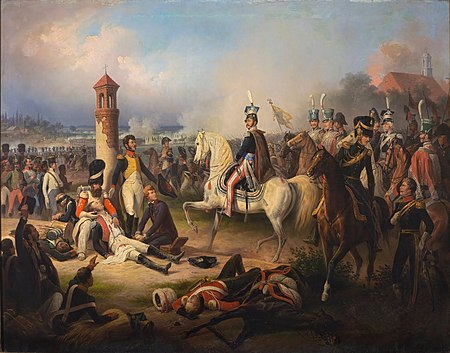
The Austro-Polish War or Polish-Austrian War was a part of the War of the Fifth Coalition in 14 April 1809 (a coalition of the Austrian Empire and the United Kingdom against Napoleon's French Empire and Bavaria). It ended October 14, 1809. It lasted 6 months.

Vilna, the largest city as well as capital, was lost to Poland in 1919, the result of WWI. This weakened the Jews of Vilna. After 1924, autonomy was restricted solely to religious matters, while the economic position of the Jews deteriorated in the oncoming years.

No Jews survived the expulsion of Jews of 1290 when Jews were also expulsed from England. A few former Marranos settled in Dublin after 1660 and more arrived as military purveyors after the 1689 revolution. Original Jews were displaced by Ashkenazim, but by 18th century, population declined and by 1816 there were only 3 Jewish families in Dublin and a few in other Irish towns. They were joined by others in 1822 and the population was 400 by 1880. Emigration from Eastern Europe took place at the end of the 19th century and many went to Dublin, Cork, Waterford, Limerick, Belfast. the chief rabbinate was founded in 1918 being Yitzhak Halevi Herzog with the Jewish population in 1990 at 1,600, mainly in Dublin,
Many Jews of Lithuania moved on to Dublin, Ireland and from there, to South Africa which Jews started settling in the early 19th century. Capetown had a synagogue by 1841. The settlers were traders and peddlers who traveled among the Boer farmers. Later they went to the towns. Gold was discovered there in the end of the 19th century, which eastern European Jews which drew many. Johannesburg became the main Jewish settlement, and they enjoyed the political equality in Cape Colony and Natal, but obtained it in the Transvaal only after the 2nd Boer War. Immigration to South Africa was popular following WWI and came mostly from Lithuania.

I know that Simon Goldfoot moved from Lithuania to South Africa in the 20's. His son, Stanley Goldfoot b: May 2, 1914, was born there in Houghton, Johannesburg, South Africa. Immediately after graduation high school, he made Aliyah to Palestine, and he lived in Jerusalem, becoming the Chief of Intelligence for the Stern Group which the British called the Stern Gang.

Polish–Lithuanian Conflict) was an undeclared war between newly independent Lithuania and Poland following World War I, which happened mainly, but not only, in the Vilnius and Suwałki regions. The war is viewed differently by the respective sides. According to Lithuanian historians, it was part of the Lithuanian Wars of Independence and lasted from May 1919 to 29 November 1920. Polish historians deem the Polish–Lithuanian war as occurring only in September–October 1920. Since the spring of 1920, the conflict became part of the wider Polish–Soviet War and was largely shaped by its progress. It was subject to international mediation at the Conference of Ambassadors and the League of Nations.
Though most emigration from Lithuania went to Israel, it is now going to other English-speaking countries. The rabbis of the principal congregations in Johannesburg (Jewish population was 63,620. Cape Town of which Cape Peninsula had 28,000. Chief rabbis and 65 synagogues are affiliated to the Orthodox Federation of Synagogues. A Reform Movement started in 1933 and has 14 affiliated congregations. Also, there are 69 nursery schools, 10 primary schools and 8 high schools. They have an extensive Jewish press and a lot of cultural activities. By 1990 there were 120,000 Jews living in South Africa.
In 1923, there were 300 Jewish elementary schools, the majority teaching in Hebrew, a minority in Yiddish (Hebrew-German Combo).
Jews of Central Europe in the 14th and 15th centuries immigrated to Ukraine and from Poland in the 16th to 17th centuries. Severe massacres happened during the Chmielnicki and the Haidamak uprising in the 17th to 18th centuries.
The Frankist and Hasidic movements originated in the 18th century in Ukraine which was also associated with the early Zionism in the 19th-20th centuries. Jews of Galicia and White Russia had emigrated there.
The Soviet Government promoted Jewish settlement in the Ukraine in the 1920's, however. They used the funds of the American Joint Distribution Committee in the regions of Kalinindorf, Zlatopol, and Stalindorf. By 1930 there were 90,000 Jewish agriculturists there. In January 1918 , a regime of national autonomy was estalished in the Ukraine. Jewish economy and culture suffered under Soviet rule. About half of Soviet Russia's 3 million Jews lived there before WWII. Under Nazi rule, the Jewish people who had not fled to Russia were wiped out by the Germans and Ukrainians from 1941 to 1942. The Jewish population was officially put at 777,126 in 1970 and at 484,129 in 1989.
There were restrictions on them imposed during the 1930's limited the influx (when Germany and Nazism were affecting all countries towards Jews), although many German Jews were able to settle in South Africa. After 1939, however, Jewish immigration was small to nothing. It has increased again in the late 1980's. .jpg%20invasion%20of%20Poland.jpg)
In 1939 when Germany marched into Poland, starting WWII, the Jewish population numbered about 175,000. About 25,000 were deported by the Russians from Lithuania and Latvia in July 1940. The remaining Jews were massacred by the Germans and Lithuanians by 1943. 24,000 Jews were living there in 1959, but by 1989 about half of these had left for Israel, leaving 12,312. Today of 2023 there are 52,300. I presume most have made aliyah to Israel.
Jews of Central Europe in the 14th and 15th centuries immigrated to Ukraine and from Poland in the 16th to 17th centuries. Severe massacres happened during the Chmielnicki and the Haidamak uprising in the 17th to 18th centuries.
The Frankist and Hasidic movements originated in the 18th century in Ukraine which was also associated with the early Zionism in the 19th-20th centuries. Jews of Galicia and White Russia had emigrated there.

Ukraine was the center of anti-Semitism. It was the scene of pogroms in 1905 and 1918 to 1920. Fiddler on the Roof was situated in Ukraine. As the play begins, Tevye, a Jewish milkman, tells of the customs in the little Russian town of Anatevka. It is 1905, and life here is as precarious as a fiddler on the roof, yet, through their traditions, the villagers endure. Anatevka (Ukrainian: Анатевка) is a Ukrainian refugee village that provides food, housing, education, and medical support for refugees resulting from the 2014 Russian invasion and the 2022 Russian invasion of Ukraine. The village was established in 2015 and currently houses hundreds of families.
The Soviet Government promoted Jewish settlement in the Ukraine in the 1920's, however. They used the funds of the American Joint Distribution Committee in the regions of Kalinindorf, Zlatopol, and Stalindorf. By 1930 there were 90,000 Jewish agriculturists there. In January 1918 , a regime of national autonomy was estalished in the Ukraine. Jewish economy and culture suffered under Soviet rule. About half of Soviet Russia's 3 million Jews lived there before WWII. Under Nazi rule, the Jewish people who had not fled to Russia were wiped out by the Germans and Ukrainians from 1941 to 1942.

The Jewish population was officially put at 777,126 in 1970 and at 484,129 in 1989. Volodymyr Oleksandrovych Zelenskyy (also transliterated as Zelensky or Zelenskiy; born 25 January 1978) is a Ukrainian politician and former comedian and actor who is the sixth and current president of Ukraine since 2019.
Reference;
https://katz.sas.upenn.edu/resources/blog/ironies-history-ukraine-crisis-through-lens-jewish-history
https://wisevoter.com/country-rankings/jewish-population-by-country/
https://en.wikipedia.org/wiki/Austro-Polish_War
https://en.wikipedia.org/wiki/Polish%E2%80%93Lithuanian_War
Labels: Anaatevka, Catherine II, Czars, Dublin, Gaon of Vilna, Lazdijai, Poland, Russia, South Africa, Soviets, Tartar, Telsiai, Ukraine, Vilna


Monday, April 30, 2018
The Gaon of Vilna Connection: Rubenstein
 |
| RASHI, famous biblical and Talmudic commentator whose thoughts are in our prayer books b: 1040 in Troyes, France, d: 1105 France Studied in the Rhineland Rabbi Solomon Yitzhaki (ben Isaac) =RASHI |
I woke up with an idea brewing in my head. It finally bubbled up and I knew what to search. When I had spoken with my 3rd cousin, Stanley Goldfoot, many years ago in Jerusalem, he had mentioned that he thought the Goldfoot line was related to the Gaon of Vilna, a Lithuanian Rabbi of great esteem of the Mitnaggedim branch of Jewish thought. Goldfoot or the original name of Goldfus is not listed as a descendant of the Gaon in Chaim Freedman's book, ELIYAHU'S BRANCHES, the bible of genealogy for the Gaon. I surmised at the time that Stanley's connection must have been from his mother's side. She was a Tavriger. I promptly put aside the thought that we might be connected.
 |
| Rabbi Samson Wertheimer b: 1658 Worms, Germany; d: 1724 Vienna, Austria Nephew of Samuel Oppenheimer |
Another route to RASHI, I was told, was through the surname, Rubenstein. I'm not sure which one is the common ancestor. Rabbi Wertheimer was one route the group had discovered and another was Rubenstein.
There was a Rabbi Isaac Rubinstein b: 1880-d: 1945. In 1906 he was appointed as the rabbi in Vilna by the government. In 1920 he was made Minister of Jewish Affairs in the Lithuanian government. Vilna, a center of Jewish learning in Lithuania, was annexed to Poland in 1922. Rubinstein was elected to the Polish Senate where he fought for Jewish rights. until the Nazis came. He became joint chief rabbi of Vilna in 1928. Then Soviet Russia annexed Lithuania in 1940. Rubinstein left the country then for New York and taught at the Rabbi Isaac ElhananYeshivah.
My family tree has an extensive history of Stanley's family who left Lithuania at about the same time my grandfather, Nathan Abraham Goldfus did. Stanley's mother's history of Tavriger is found only in Ireland, where Stanley's parents and my grandfather also lived after leaving Lithuania; mine being a very short period there. A Tavriger was married to a Reubenstein, not a Rubenstein. That spelling doesn't come up much anymore if ever.
 |
| The Gaon of Vilna b: 1720 in Lithuania d: 1797 in Vilna, Lithuania Claimed descent from King David |
Katzenellenbogen is an important surname and is found in the book by Dan Rottenberg, FINDING OUR FATHERS-a guide to Jewish Genealogy. In this book on page 11 is chart B with RASHI's traditional ancestors. On page 12 is chart C with Rashi and his Descendants. On page 13 is chart D of the Luria family showing an unbroken line almost back to RASHI. On page 14 is the last chart of E, showing how he families Rashi, Treves, Luria, Minz, Katzenellenbogen, WAhl, Drucker, Horowitz, Isserles and even Karl Marx are all related to each other.
The relationship to the Gaon of Vilna also includes: Claire Oppenheim and Nora Oppenheimer. Also, there are 4 Rubensteins listed in Freedman's book that connect to the Gaon.
Rabbinical families tended to intermarry if they were within distance and in the same generations. With traveling in today's world, we are brought together and have wonderful ancestry to mix with each other. While not from rabbinical families, my aunt and her husband married, not ever knowing that they were distantly related. He just managed to get out of Germany in 1939 and our family had left Germany possibly by the 1500's when we could have entered Lithuania. This was discovered through a tool on GedMatch through her daughter's DNA. I wonder if I"ll match someone related to the Gaon of Vilna.
 |
| David ruled from 1010 BCE to 970 BCE over Israel. He took over from King Saul. That's over 3,000 years ago. He was Jesse's 8th son and was from the tribe of Judah while King Saul was from the tribe of Benjamin. |
Several roads lead to being the descendants of King David. "Most families claim descent from King David through Rashi. Several families claim descent "ben akhar ben"(father to son) in a direct line, most notably the Dayan, Shealtiel and Charlap/Don Yechia, families*."Hillel, Rabban Gamliel, Rabbi Yehuda Hanasi, Yochanan Hasandler, Rashi, the Rambam and Yosef Karo as well as the more contemporary gedolim like the Baal Shem Tov, the Breslevor Rebbe and the first Lubavicher Rebbe, Shneur Zalman of Liadi, to name but a few have traced their family back to King David.
Wives of David, King of Israel,
1 [1] King of Israel David b: in 1000 BCE Bethlehem d: in 960 BCE Occupation: King of Israel
.. +Bathsheba b: in Giloh, Judah
*2nd Wife of [1] King of Israel David:
.. +Ahinoam of Jezreel
*3rd Wife of [1] King of Israel David:
.. +Michal the First, Daughter of Saul
*4th Wife of [1] King of Israel David:
.. +Abigail b: in Carmelite
*5th Wife of [1] King of Israel David:
.. +Maachah Fromgeshur
*6th Wife of [1] King of Israel David:
.. +Merab
*7th Wife of [1] King of Israel David:
.. +Haggith
*Partner of [1] King of Israel David:
.. +Abital
*8th Wife of [1] King of Israel David:
.. +Eglah
*9th Wife of [1] King of Israel David:
.. +Maacah
Research: https://en.wikipedia.org/wiki/Rashi
The New Standard Jewish Encyclopedia
Finding Our Fathers by Dan Rottennberg
Eliyahu's Branches by Chaim Freedman
http://eliyahusbranches.blogspot.com/2011/02/ancestry-of-gaon-of-vilna-descent-from.html
http://www.davidicdynasty.org/*
Tanakh, the Stone Edition (bible)
Labels: Chaim Freedman, Dan Rottenberg, dna, Gaon of Vilna, genealogy, King David, Rabbi Samson Wertheimer, Rashi, Rubenstein, Stanley Goldfoot
Sunday, February 06, 2011
The Gaon of Vilna; Possible Ancestor
In the 18th Century the city became a center of rabbinical study, being called the Lithuanian Jerusalem. This is when the best known scholar lived who was Elijah Ben Solomon Zalman, known in the Jewish world as the Vilna Gaon. He lived from 1720 to 1797.
My distant cousin that I located in Jerusalem, Stanley Goldfoot, told me that our family was related to him. Since then I've found many genealogies claiming to be related to him. Being our Goldfoot family came from Lithuania, it's possible. Gaon mean genious, and he was. He worked on the Talmud and did clarify it. He disagreed with the Misnagdim or Chassidim, however. He always wanted to live in Israel, but for unknown reason wasn't able to get there.
Since it has been found by genetic scientists that 70% of Jewish men still have a Middle-Eastern DNA pattern on the male line despite the 2,000 years or more of living outside the area, it's possible we can be connected. The Eastern European Ashkenazi community of over 8 million people is largely descended from a small number of "founders" of about 25,000. From 1300 to the Holocaust of about 1939, Jews had to almost totally marry within the Jewish group. So the Ashkenazi Jew is more closely related genetically to another Ashkenazi than other Jews outside of the group. All persons of Eastern European Jewish descent share many markers because they are descended from a rather small group of individuals, perhapps 50,000 who were alive in the year 1500. It's quite possible that we are indeed related to the Vilna of Gaon.
By the late 1800's Goldfoots were living only from 120 to 150 miles from Vilna in Telsiai and Rossieny.
Now all I need is to meet someone who definitely is connected to the Vilna Gaon and find out his dna and see if we share a few markers which can be done through 23 & Me, a company I just tested my dna with or I'd even settle with some paper evidence.
2/22/11 Update: I have bought the book, Eliyahu's Branches by Chaim Freedman and do not find the surname of Goldfoot or Goldfus/fuss listed in it as a descendant of the Gaon of Vilna. The connecting party that Stanley was sure to be connected out of the Goldfoot family could have been from the mother's side way back. Unfortunately, I cannot find this person. It is true that Jewish people in a community would have wound up being related to each other after a period of time, so that it is still possible; just not verifiable at this time. We need to find a person who is definitely an ancestor and then compare genes. Even at that, over a long time of a connecting person, the genes will not show a large percent of connection. Something would be better than nothing, however.
http://www.jewishvirtuallibrary.org/jsource/biography/vilnagaon.html
Standard Jewish Encyclopedia
Labels: Gaon of Vilna, relationship
